

- 62%


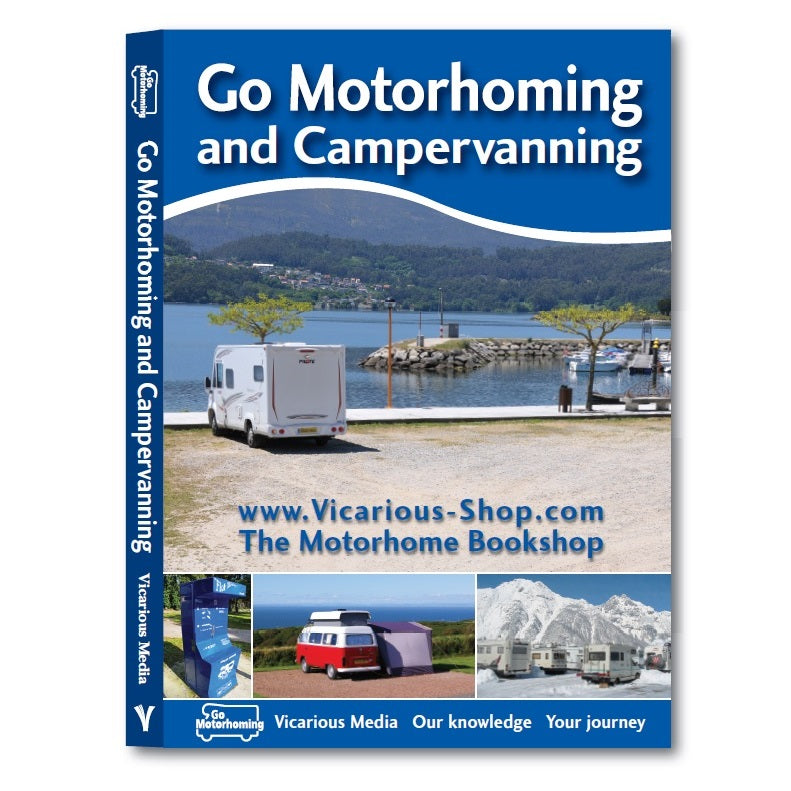
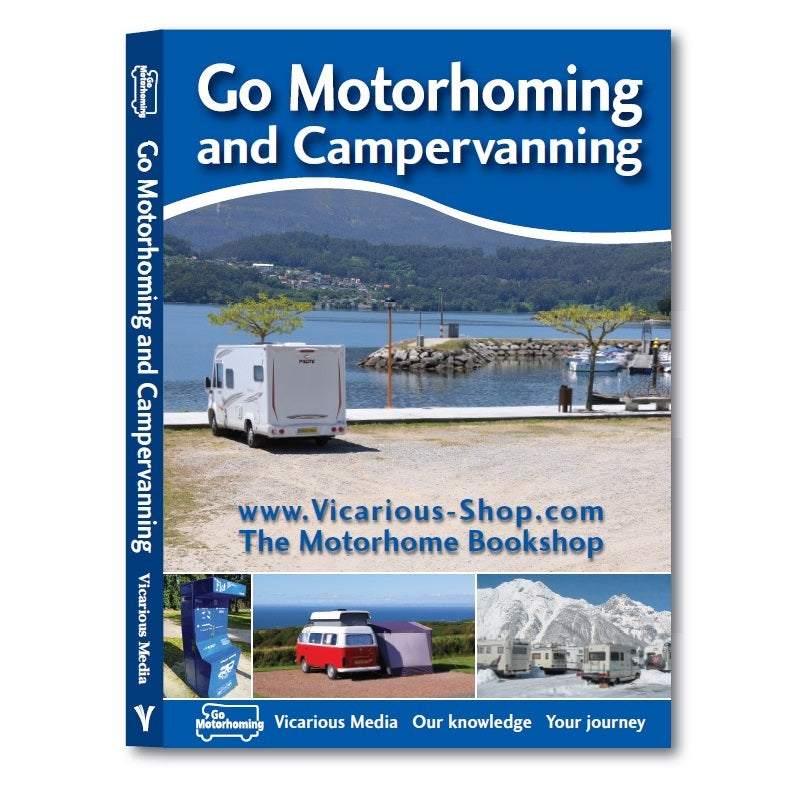

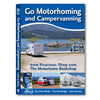
Go Motorhoming and Campervanning
SKU: GoMo ISBN:- Regular price
- £11.99
- Sale price
- £4.50
- Unit price
- per
Secured & Safe Checkout :


Go Motorhoming and Campervanning is the most comprehensive book available on the subject of motorhoming. It will tell you everything you need to know before you go and will act as a handy reference guide during your journey. Whether you're a novice or old hand, don't Go Motorhoming without this book.
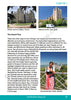
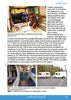
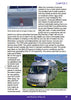
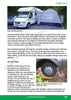
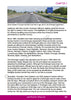
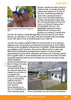
Seven detailed chapters, discuss everything from what questions to ask before you buy to how to stay warm in the winter. Chapter by chapter your knowledge will build, and everything you need to know is fully explained; not just how things work, but also what that means to you. Real life examples clarify the point and colour pictures show you exactly what to look for. The authors have written mental challenges for you so that you can work out exactly what you want from a motorhome.
Campervanners might not consider themselves as motorhomers, but the reality is they drive similar vehicles only a different size. This is important because motorhome and campervan users have the opportunity to do so much more than pitch at campsites. For example, they can use Motorhome Stopovers called Aires in France, Belgium, and Luxembourg or Stellplatze in Germany, Switzerland, and Austria. Motorhome Stopovers, also called Camper Stops, are dedicated overnight parking areas where you can park and sleep overnight in your motorhomes and campervans. These Motorhome Stopovers are sometimes incorrectly referred to as wild camping spots or free camping spots. Go Motorhoming and Campervanning completely explains the ins and outs of free offsite parking and campsites.
This is the third edition of this excellent motorhome book. The current edition was thoroughly edited and updated for 2015, then reprinted with amendments for 2017. The first edition, named Go Motorhoming Europe (ISBN 9780955280801), was written by Chris Doree and Meli George and was published in 2006 by Vicarious Books LLP. This book was dubbed 'the bible of motorhoming' and received excellent magazine reviews. Chris and Meli extensively rewrote the second edition during 2011 for release in 2012, when the book was renamed Go Motorhoming and Campervanning (ISBN 9780956678119).
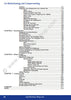
The seven detailed chapters cover:
CHAPTER 1
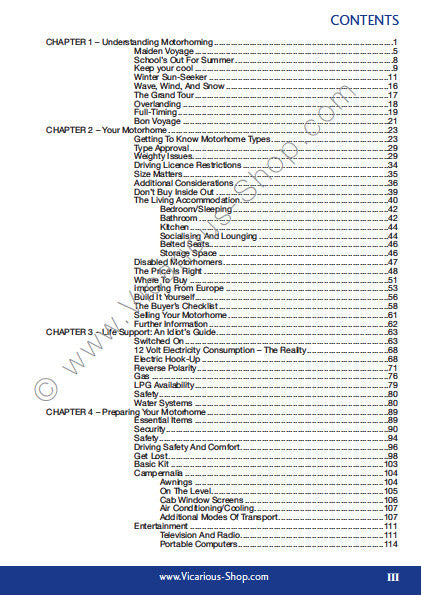
Understanding Motorhoming: Maiden Voyage, School's Out for Summer, Winter Sun-Seeker, Wave, Wind and Snow, The Grand Tour, Overlanding, Full-Timing in a Motorhome.
CHAPTER 2
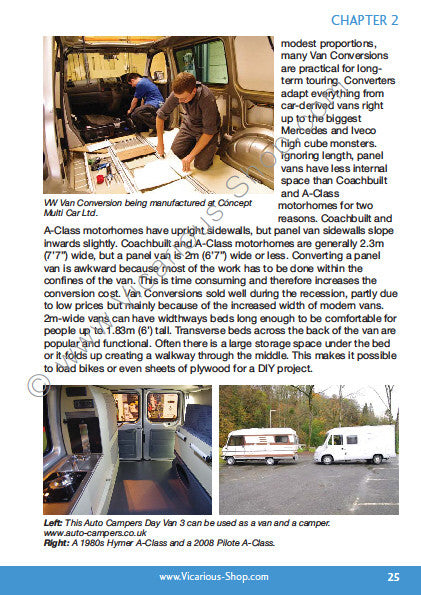
Your Motorhome: Getting To Know Motorhome Types, Type Approval, Weighty Issues, Driving Licence Restrictions, Size Matters, Additional Considerations, Don't Buy Inside Out, The Living Accommodation, Belted Seats, Storage Space, Disabled Motorhomers, The Price is Right, Where to Buy, Importing From Europe, Build It Yourself, The Buyer's Checklist, Selling Your Motorhome.
CHAPTER 3
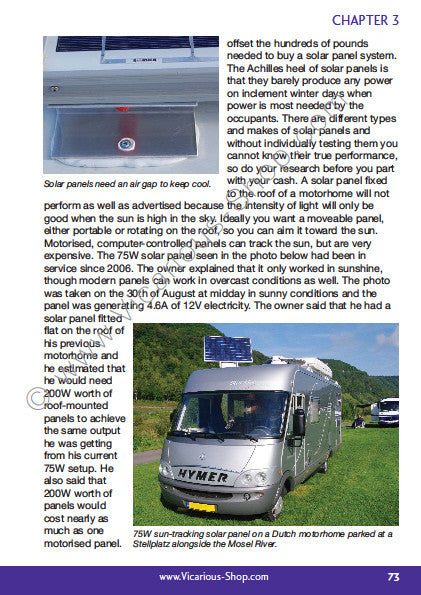
Life Support: An Idiot's Guide: Switched On, 12 Volt Electricity Consumption -The Reality, Electric Hook-Up, Gas, LPG Availability, Safety, Water Systems.
CHAPTER 4
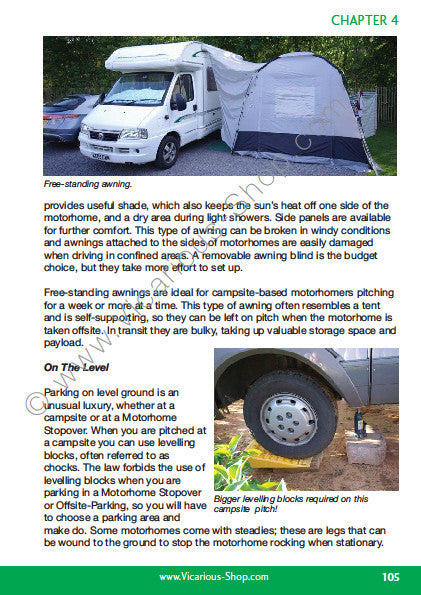
Preparing Your Motorhome: Essential Items, Security, Safety, Driving Safety and Comfort, Get Lost, Basic Kit, Campernalia, Awnings, On the Level, Cab Window Screens, Air Conditioning/Cooling, Additional Modes of Transport, Entertainment, Television and Radio, Portable Computers, Hobbies, Preparing Your Motorhome for a Winter Trip.
CHAPTER 5
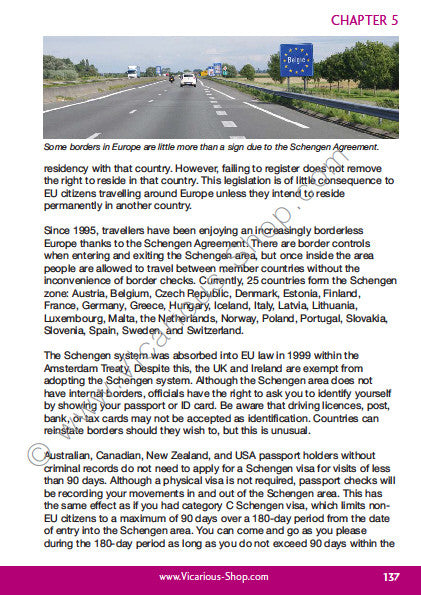
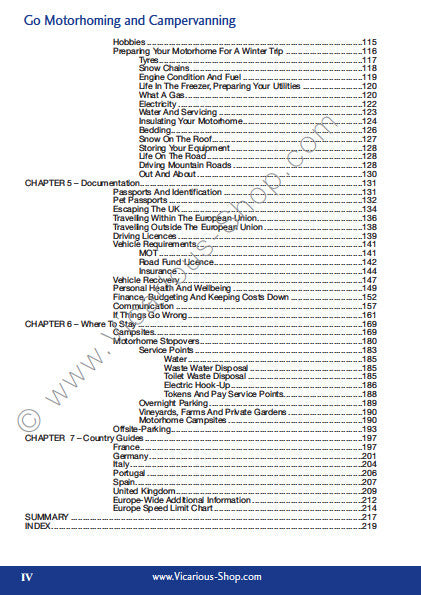
Documentation: Passports and Identification, Pet Passports, Escaping the UK, Travelling Within the European Union, Travelling Outside the European Union, Driving Licences, Vehicle Requirements, MOT, Road Fund Licence, Insurance, Vehicle Recovery, Personal Health and Wellbeing, Finance, Budgeting and Keeping Costs Down, Communication, If Things Go Wrong.
CHAPTER 6
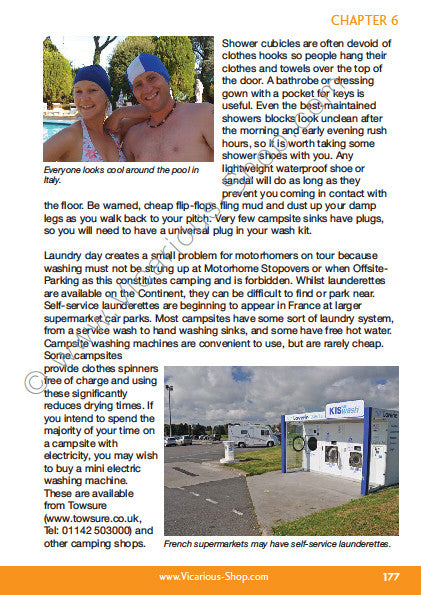
Where To Stay: Campsites, Motorhome Stopovers, Service Points, Overnight Parking, Vineyards, Farms And Private Gardens, Motorhome Campsites, Offsite-Parking.
CHAPTER 7
Country Guides: France, Germany, Italy, Portugal, Spain, United Kingdom, Europe-Wide Additional Information, Europe Speed Limit Chart.
Go Motorhoming and Campervanning explains in a simple yet detailed way how the onboard systems work: 12V systems: leisure batteries, charging, solar panels, Efoy fuel cells, wind turbines; 230V electrical systems simplified, reverse polarity, generators; gas and water systems.
The quality you have come to expect from Vicarious Media
All our guides are thoroughly researched and edited with you in mind. We include everything you need to know, based on our expert knowledge and first-hand experience, and nothing you don't. Browse the full collection of Vicarious Media guides to discover what other inspiration and guidance we offer.
Industry reviews of Go Motorhoming and Campervanning
MMM 'Essential pleasurable reading for novice or old hand.' Barry Crawshaw, Marketplace.
Practical Motorhome '... it's jam-packed with information on touring,... Whether you're a true beginner or an experienced motorcaravanner, you're sure to learn to something from the helpful book.' Sarah Wakely.
Motor caravanner 'It really is a powerhouse of information plus hints and tips based on real active motorcaravanners' experiences both at home and abroad. It is lavishly illustrated and written in an easy-to-digest style, debunking myths and explaining terminology as it goes.' 'Without question, if you want a first class primer to the motorcaravanning world, which is also an up-to-date useful reference book to keep in the van, then this is it. I've a lifetime of motorcaravanning under my belt, but I wouldn't leave home without this useful glove-box sized travelling companion.' Gentleman Jack.
Go Motorhoming is now available as an ebook. Buy a copy of the ebook or download a free sample from Smashwords.
Typical Shipping Costs
| UK | Tracked 48 | 50p upto 1.85kg £1 - 2.2kg. £1.5 - 3kg. Then 25p/kilo |
| UK | Tracked 24 | From £1.50p |
| BedAirer | Tracked 48 | From £1.00 |
| Rest of world | Sold Via Ebay | See link in description |